

If you are a new mom, then congratulations to you. Many new mothers face challenges with breastfeeding, but the good news is, every problem has a solution. The sooner you learn about them, the sooner you can have a successful breastfeeding experience. One of the first questions new moms have is how to hold the baby properly for breastfeeding. In today’s blog, we’ll share some important Breastfeeding tips for new moms, that every new mother should know.
Why Breastfeeding Matters for Your Baby
Breastfeeding is not just feeding, it is a beautiful emotional bond between a mother and her child. Breast milk is the best and most complete nutrition your baby can receive. Many new mothers worry whether their milk is “thin” or “thick.” But remember: Both thin and thick breast milk are healthy. Your body produces the perfect milk for your baby’s needs. Right after birth, the first milk that comes out is called colostrum, a thick, yellowish liquid. It appears within the first 48 hours and is extremely rich in:
-
proteins
-
antibodies
-
immunity-boosting nutrients
Colostrum protects your baby from infections, builds immunity, and helps the digestive system function properly. This is why no water, honey, or formula should be given immediately after birth unless recommended by a doctor.
Breastfeeding Tips for New Moms: Start Breastfeeding Early
Experts recommend starting breastfeeding within one hour of birth, if the mother and baby are healthy. Early breastfeeding helps:
-
strengthen bonding
-
stimulate milk production
-
stabilize the baby’s temperature
-
reduce the risk of newborn infection
-
teach the baby how to latch properly
Early skin-to-skin contact also helps calm the baby and makes breastfeeding easier.
Comfortable Breastfeeding Positions for New Moms:
1. Cradle Position
This is one of the most common breast feeding position . In this position, you place your baby in a crook of your arm. baby’s head is resting on the bed of the elbow. The baby’s body should be facing your chest and you can use your other arm to support your baby’s back and neck.

2. Football Position
This position is good for mothers who had C- Section delivery. In this position, hold your baby under your arm. Rest the baby’s head on pillow or on your hands. That baby is Tucked under your arm and the legs are pointing towards your back. This position particularly is helpful for mothers ,who had a difficult delivery.

This position is ideal for:
-
mothers who had a C-section
-
women with large breasts
-
premature babies
-
twins (you can feed both at the same time)
3. Cross Cradle Position
This cross cradle position is similar to cradle position, but the mother is using the opposite arm to support the baby’s head. In this position, the baby’s body is facing your chest and baby’s nose is in line with your nipple. You can use your other hand to support baby’s back and neck. This position can be helpful for mothers who are struggling with effective sucking or have a premature or small baby.
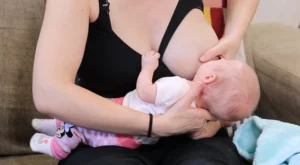
4. Laid Back Position
For this position you can rest your back in a semi reclining position with the baby lying on top of you. The baby can be positioned on your stomach or on your chest. And baby will naturally find your breast. This position can be helpful for mothers who want more relaxed and natural breastfeeding position.

The most important thing is that your baby feels comfortable while feeding. However, one key point to remember is that the dark area of the breast, called the areola, should be fully inside the baby’s mouth, not just the nipple. This helps the baby suck properly and prevents pain for the mother.
This is best for:
-
mothers with fast milk flow
-
babies who struggle with latching
-
moms who want a relaxed feeding experience
Feed on Demand: Essential Breastfeeding Tip for New Mothers
Whenever your baby shows signs of hunger. Do not wait for a fixed schedule.
Signs your baby is hungry:
- Sucking fingers or hands
- Opening the mouth
One important thing to remember, Sometimes while feeding, your baby may close their eyes and look calm, and you might think they are full. But actually, breastfeeding is a kind of exercise for the baby, so they may just be tired and take a short nap. If the baby’s mouth is still on the nipple, it means the feeding is not yet complete. Let your baby continue until they finish naturally.
Types of Breast Milk Every New Mom Should Know
1. Foremilk:
When a baby starts breastfeeding, the first milk that comes out is called foremilk. It is thin and light in colour. Foremilk contains proteins, minerals, vitamins, and a lot of water, which helps keep the baby hydrated.
2. Hindmilk:
The hindmilk, which is thicker and whiter. Hindmilk has a higher amount of fat, which makes the baby feel full and satisfied. That’s why it is important for the baby to get both foremilk and hindmilk from the same breast during feeding.
Diet Tips for Breastfeeding moms
During pregnancy, women are advised to take care of their diet, exercise, and lifestyle.
But after delivery, many new mothers get so busy taking care of their baby that they forget about their own diet.
Let’s learn what foods you can eat and should avoid during breastfeeding.
Foods to Avoid During Breastfeeding
- Stop alcohol and smoking completely.
- Reduce tea and coffee intake.
- Avoid processed foods and canned juices.
Foods to Eat During Breastfeeding
1. Small Frequent Meals
During this time, the digestive system becomes weak.
So, eat 6–7 small meals a day, every 2–3 hours.
2. Hydration
Drink at least 8–10 glasses of water daily.
You can also drink coconut water, fruit juice, soup, and buttermilk.
3. Milk and Milk Products
Take milk or milk products 2–3 times a day.
You can have low-fat curd and paneer.
Cheese can be taken occasionally (once every 8–10 days).
4. Green Vegetables
If you usually eat 2 bowls of green vegetables, increase it to 3–4 bowls during lactation because your diet needs more nutrients after delivery.
5.Whole Legumes
Eat dals and lentils with their skin, like whole moong or masoor dal.
6. Milk-Boosting Foods
Add foods that help increase breast milk, like oats, fenugreek seeds, and fennel seed.
Nipple Care Tips During Breastfeeding for New Moms
Sore nipples are common but can be managed:
- Let nipples air dry after feeding.
- Apply a few drops of breast milk or nipple cream for soothing.
- Avoid harsh soaps and alcohol-based wipes.
Common Breastfeeding Problems and Solutions for New Mothers
Most moms face these issues — and they are completely normal.
1. Low Milk Supply :
Low milk supply is common, but it can be improved by feeding frequently and staying well-hydrated. Include milk-boosting foods like oats, fennel, and fenugreek, and practice skin-to-skin contact to increase milk let-down. Avoid stress and long gaps between feeds to maintain a healthy milk flow.
2. Engorgement (Breasts feel hard and painful)
Engorgement happens when the breasts are overly full. Use a warm compress before feeding to soften the breast and improve milk flow, and a cold compress after feeding to reduce swelling. Gently massage the breast and express a small amount of milk if needed to relieve pressure
3. Blocked Milk Duct
A blocked duct causes a painful lump in the breast. Take a hot shower and massage gently toward the nipple to open the duct. Feed frequently and ensure your baby has a proper latch, which helps clear the blockage naturally.
4. Mastitis (Infection)
Mastitis usually develops from an untreated blocked duct and causes fever, redness, and breast pain. Continue feeding and seek medical attention immediately, as you may need antibiotics to prevent complications.
Final Thoughts: Breastfeeding Tips for New Moms
Breastfeeding is not just feeding, it is love, care, and connection. Every mother’s journey is unique, so enjoy the satisfying experience of breastfeeding your newborn and build a lasting, loving bond with your baby.If you ever feel unsure or uncomfortable during your breastfeeding journey, do not hesitate to seek help. You can reach out to a lactation consultant for feeding techniques and latching support, your gynecologist for any medical concerns, or a breastfeeding counselor for guidance and emotional reassurance.
“Breastfeeding is not just ‘part of the diet’! It is a close, intimate relationship between a mother and baby that cannot be duplicated by feeding of expressed milk.”
— Dr. Jack Newman